Leo Sayer Songs and Albums: The Story of His 1970s Success
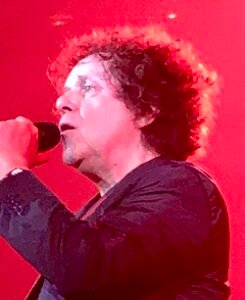
In this look at Leo Sayer songs we will concentrate on his 70s hits. Leo Sayer was one of the most distinctive British singers of the 1970s. With his unruly curls, expressive voice and memorable stage appearance, he was a familiar face on television and a regular presence in the singles charts.
I remember going to see Leo at the Sophia Gardens Pavilion in Cardiff in 1978 and if I remember correctly (old age) it was a great night:)
His music covered quite a range. There were thoughtful singer-songwriter recordings, energetic pop songs, soulful ballads and the disco-influenced sound that helped make him an international star.
For many people, the first song that comes to mind is “When I Need You”, his 1977 UK number one. Others will remember dancing to “You Make Me Feel Like Dancing”, or perhaps his earlier hits “The Show Must Go On” and “Long Tall Glasses”.
But there was much more to Leo Sayer than those familiar singles. He was also a songwriter who helped launch Roger Daltrey’s solo career, worked with some of the finest musicians in America and released a succession of successful albums.
Let’s look back at Leo Sayer’s career during the 1970s, including his biggest songs, the albums that established him and the people who helped shape his music.
The early years: From graphic artist to songwriter
Music, however, was becoming an increasingly important part of his life. He had been influenced by artists such as Buddy Holly, Elvis Presley and Bob Dylan, and developed an interest in blues, folk and rhythm and blues. He also became a capable harmonica player.
After performing with local groups, he formed a band called Patches. It was through a talent competition in Brighton that he met songwriter David Courtney, who would become an important creative partner.
Courtney had connections with Adam Faith, having previously played drums with the singer. He introduced the pair to Faith, who recognised Sayer’s potential and became involved in managing and developing his career.
The partnership between Sayer and Courtney produced some important songs, including “One Man Band” and “Giving It All Away”. The latter was recorded by Roger Daltrey, lead singer of The Who, for his first solo album in 1973. It reached number five in the UK singles chart, giving the young songwriting partnership a considerable boost.
There was also a change of name. Gerry Sayer became Leo Sayer, with Courtney choosing Leo after the television cartoon character Leo the Lion.
Silverbird and The Show Must Go On
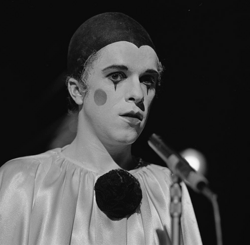
The Pierrot appearance, with its white face and clown-like costume, became closely associated with his early career. The inspiration came from photographs of a Belgian mime artist, and it gave Sayer an instantly recognisable look.
His early television appearances helped establish that image, particularly a performance on the BBC’s The Old Grey Whistle Test. He also toured Britain and Europe supporting Roxy Music, taking the Pierrot character onto the concert stage.
The first single from Silverbird was “Why Is Everybody Going Home”, but it was the second release, “The Show Must Go On”, that really brought him to public attention.
Released towards the end of 1973, the song reached number two in the UK singles chart. The album was equally successful, reaching number two in the UK Albums Chart.
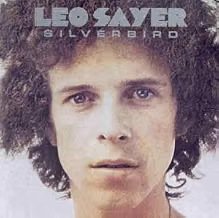
“The Show Must Go On” remains one of his most recognisable recordings. It has a theatrical quality, with a memorable melody and a vocal performance that suited his Pierrot character perfectly.
Sayer eventually decided that the make-up and costume should not define him. In June 1974, after returning from his first American tour, he dropped the Pierrot appearance and continued performing without it.
Just a Boy: One Man Band and Long Tall Glasses
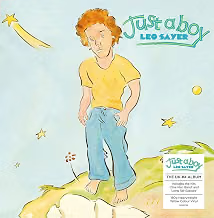
The second album, Just a Boy, was released in 1974 and continued his success. It reached number four in the UK Albums Chart.
It included two of his best-known early singles, “One Man Band” and “Long Tall Glasses (I Can Dance)”.
Sayer’s recording reached number six in the UK charts in 1974.
“Long Tall Glasses (I Can Dance)” followed and became an even bigger hit, reaching number four in Britain. It also became his first American Top 10 single.
According to Sayer’s official biography, the song reflected his reaction to his growing success in America. It was an important step in establishing him as an international performer, rather than simply another British chart singer.
Another Year and the success of Moonlighting
In 1975, Leo Sayer released Another Year, his third studio album.
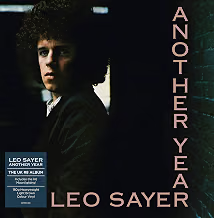
This time he worked with songwriter Frank Farrell, while Adam Faith and Russ Ballard were involved in producing the record.
The album reached number eight in the UK, and it produced one of his most memorable singles, “Moonlighting”.
Released in August 1975, “Moonlighting” climbed to number two in the UK singles chart. It had a slightly different feel from the earlier hits, with a strong melody and a more mature sound.
It was another example of Sayer’s ability to deliver a memorable pop song without relying on the novelty of his early stage appearance.
By this point, he was an established star in Britain and was also enjoying considerable success overseas. His tours took him across Europe, Australia, New Zealand and America.
Endless Flight: The album that took him to the top
Produced by American record producer Richard Perry, the album introduced a more polished sound, drawing on pop, soul and disco influences. Perry had worked with a number of major artists, and his production gave Sayer’s music a new international dimension.
The first single, “You Make Me Feel Like Dancing”, became a huge success. Written by Sayer and Vini Poncia, the song developed from a studio jam session. It featured musicians including drummer Steve Gadd and guitarist Ray Parker Jr.
The record reached number two in the UK and number one in America. In 1978, Sayer and Poncia received a Grammy Award for Best Rhythm & Blues Song.
It was a remarkable achievement, particularly for a British singer who had started out writing songs and playing in local bands only a few years earlier.
But Endless Flight had another enormous hit waiting on it.
When I Need You
“When I Need You” became Leo Sayer’s first UK number one in February 1977, remaining at the top for three weeks.
Unlike “You Make Me Feel Like Dancing”, this was a romantic ballad, written by Albert Hammond and Carole Bayer Sager. Sayer’s performance brought a warmth and sensitivity to the song, and it became one of the defining records of his career.
It also reached number one in America, making him a major international recording artist.
For many fans, Endless Flight remains the essential Leo Sayer album.
Thunder in My Heart and the changing sound of 1977
Following the success of Endless Flight, Sayer and Richard Perry returned to the studio to record Thunder in My Heart, released in 1977.
The album had a stronger rhythm and blues influence, with more original material and a slightly different direction from its predecessor.
Sayer worked with songwriters and musicians including Tom Snow, Albert Hammond and Michael Omartian. The title track became a single, reaching number 22 in the UK, while the album itself reached number eight.
Although it didn’t match the enormous commercial success of Endless Flight, it remains an interesting album in his catalogue.
It also deserves a mention because the title track found a completely new audience many years later. In 2006, DJ Meck reworked it as “Thunder in My Heart Again”, and the remix reached number one in the UK.
Leo Sayer Songs in 1978: A different musical direction
It was his last album produced by Richard Perry, and it revealed a more reflective side to his music. Sayer brought his harmonica into the recordings, and some of the songs had a country-influenced feel.
The album also featured some impressive musicians. Lindsey Buckingham of Fleetwood Mac played guitar, while other contributions came from musicians associated with Linda Ronstadt’s band and the group that would become Toto.
The album reached number 15 in the UK. It was not as commercially successful as Endless Flight, but it showed that Sayer was prepared to explore different styles rather than simply repeat the formula that had made him famous.
Here and The Very Best of Leo Sayer: Ending the decade
It was their first album together since Just a Boy, and the sessions brought together an impressive collection of American musicians. These included Steve Cropper and Duck Dunn from Booker T. & the M.G.’s, Bill Payne from Little Feat, Steve Lukather from Toto and Al Kooper.
The album explored a more American-influenced sound, with Sayer and Courtney writing much of the material together. It reached number 44 in the UK Albums Chart.
There was, however, a much bigger chart success that year.
The Very Best of Leo Sayer brought together many of his most successful recordings and became his first UK number one album. It reached the top of the chart in March 1979 and spent three weeks at number one.
It was a fitting way to celebrate a decade in which Sayer had gone from an aspiring songwriter to one of Britain’s most successful solo singers.
Leo Sayer’s biggest UK singles of the 1970s
Here is a look at ten of his important chart singles from the decade. The positions shown are their highest positions in the UK Singles Chart, according to the Official Charts Company.
| Single | Year | UK chart peak |
|---|---|---|
| The Show Must Go On | 1973 | 2 |
| One Man Band | 1974 | 6 |
| Long Tall Glasses | 1974 | 4 |
| Moonlighting | 1975 | 2 |
| You Make Me Feel Like Dancing | 1976 | 2 |
| When I Need You | 1977 | 1 |
| How Much Love | 1977 | 10 |
| Thunder in My Heart | 1977 | 22 |
| I Can’t Stop Lovin’ You | 1978 | 6 |
| Raining in My Heart | 1978 | 21 |
Leo Sayer Songs 1970s studio albums
Sayer released seven original studio albums during the decade. Their UK chart peaks show just how consistently successful he was during this period.
| Album | Year | UK albums chart peak |
|---|---|---|
| Silverbird | 1973 | 2 |
| Just a Boy | 1974 | 4 |
| Another Year | 1975 | 8 |
| Endless Flight | 1976 | 4 |
| Thunder in My Heart | 1977 | 8 |
| Leo Sayer | 1978 | 15 |
| Here | 1979 | 44 |
The Very Best of Leo Sayer, his 1979 compilation, is separate from the studio albums and reached number one.
Final thoughts on Leo Sayer
Looking back at Leo Sayer songs in the 1970s, what stands out is the variety of his work.
He could deliver a theatrical pop song like “The Show Must Go On”, a lively recording such as “Long Tall Glasses”, a disco-influenced hit like “You Make Me Feel Like Dancing” and a heartfelt ballad such as “When I Need You”.
He was also a songwriter who worked with some important names in the music business, from David Courtney and Adam Faith to Richard Perry and the musicians who played on his American recordings.
The 1970s were undoubtedly his most successful period in the UK charts, but his music was never confined to one particular style.
For anyone looking back at the great British singers of the decade, Leo Sayer deserves to be remembered for much more than just his biggest hits.
Thanks for visiting today.
Frank