If you were a teenager in the 1970s, there is a good chance that some of your favourite memories involve watching 1970s music television.
Before the days of YouTube, music videos and streaming, television was one of the best ways to see your favourite singers and bands performing. You could hear their records on the radio, buy their singles in the shops and, if you were lucky, watch them appear on one of the music programmes.
Two BBC shows stand out when remembering 1970s music television: Top of the Pops and The Old Grey Whistle Test.
They were very different programmes, but both played an important part in bringing music into our homes. One celebrated the latest chart hits, while the other gave viewers a chance to discover artists and music they might not otherwise have encountered.
Let’s take a trip back to the days when watching a music programme could be the highlight of the week.
1970s Music Television Top of the Pops – The Home of the Hit Parade
Broadcast weekly on BBC One, it gave viewers the opportunity to see many of the biggest chart acts of the day. It became the world’s longest-running weekly music show, continuing until 2006.
For music fans, it was a chance to put faces to the voices they heard on the radio. You could see the latest pop stars, watch their performances and find out which records were climbing the charts.
The programme also became famous for its colourful presentation. Following the introduction of BBC One’s full-colour service in November 1969, Top of the Pops embraced colour in its studio presentation and opening titles.
And what a variety of music it featured!
During the decade, viewers could see glam rock, pop, soul, disco, reggae and rock bands all appearing on the same programme.
A BBC listing for an edition broadcast on 6 October 1977 gives us a good idea of that variety. The show included Smokie, The Stranglers, Yes, Baccara, Deniece Williams, The Emotions and David Soul.
Imagine that selection appearing in one evening’s entertainment!
The dancers were part of the attraction
No look back at 1970s Music Television and Top of the Pops would be complete without remembering the dance routines.
For viewers, these performances were another part of the fun, particularly when a song didn’t have a band performing in the studio.
Dance troupes such as Pan’s People and Legs & Co became familiar faces on the programme. Their routines added another visual element to the music and became part of the show’s identity.
The programme continued to feature dance sequences towards the end of the decade. An October 1979 edition, for example, included Legs & Co alongside performances by Blondie, The Buggles, Squeeze and The Police.
Glam rock and some unforgettable performances
The early and middle years of the decade were a particularly colourful time for music television.
Glam rock artists understood how important image could be. T.Rex, David Bowie, Sweet, Slade, Mud and Suzi Quatro all helped bring a new look and attitude to popular music.
Seeing these performers on 1970s Music Television made their appearance almost as memorable as their songs.
One performance I still remember was Sweet appearing on Top of the Pops with “Wig-Wam Bam”. I particularly remember the camera focusing on Steve Priest during the song, dressed in a full headdress saying “try a little touch try a little too much”.
It’s a little moment from a television performance that has stayed with me over the years.
I’ve written more about Steve Priest and his time with Sweet in my article about Steve Priest.
If you enjoy glam rock, you might also like my guide to 70s Glam Rock Bands.
The Old Grey Whistle Test – Music Beyond the Charts
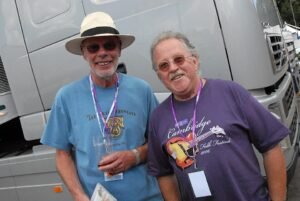
The Old Grey Whistle Test first appeared on BBC Two on 21 September 1971. It provided a regular television outlet for music that wasn’t necessarily represented by the chart shows.
It was an album-oriented music programme, featuring studio performances, interviews, reports from music locations and concert footage.
For anyone interested in discovering more than the latest hit singles, it was a valuable addition to the television schedules.
The programme was first presented by music journalist Richard Williams. Bob Harris took over in 1972 and became closely associated with the show, presenting it until December 1979. His relaxed style earned him the familiar nickname “Whispering Bob”.
Why was it called The Old Grey Whistle Test?
The name has an interesting story behind it.
According to Bob Harris, it came from an old music-industry expression. When a new record was being considered, it was supposedly played to doormen in grey suits – the “old greys”.
If they could remember the tune and whistle it after hearing it only once or twice, the record had passed the old grey whistle test.
It is a lovely piece of music folklore, and a rather memorable name for a television programme!
A chance to discover something different
The show helped bring a wide variety of artists to television audiences.
Its performances and features included musicians such as Bob Marley, Free, Roxy Music and Randy Newman, among many others.
It wasn’t simply about watching the biggest-selling singles of the week. Viewers could discover album tracks, live performances and artists who might not have received the same exposure on a mainstream chart programme.
Bob Harris’s own recollections describe the show as a mixture of music, interviews, location films and concerts, including trips to American music cities such as Los Angeles, Miami, New Orleans and New York.
For anyone who wanted to explore the wider world of rock music, there was plenty to enjoy.
I have a personal story about The Old Grey Whistle Test. Back in 1973, I was in a bar in Edinburgh with my mates when a guy came in and asked us if we liked reggae music. They were filming an episode of Whistle Test in a theatre just a few doors down from the pub, so we decided to go along. It turned out to be a great night, hosted by Judge Dread (remember him?). He even sang a couple of his own songs, which gave us a laugh at some of the lyrics! I looked it up on google and the Pioneers were there and I remember Nicky Thomas singing If I Had A Hammer, which was a great version of the song.
1970s Music Television Two Programmes, Two Different Musical Experiences
Looking back, what made these two programmes so interesting was how well they complemented one another.
Top of the Pops was about the excitement of the singles chart. You could see the records you had heard on the radio, discover new pop stars and watch the songs everyone seemed to be talking about.
The Old Grey Whistle Test offered a different experience. It encouraged viewers to explore music beyond the singles chart and gave album artists and live performers a television platform.
Both programmes reflected the extraordinary variety of music being made during the 1970s.
You could enjoy the latest glam rock hit on one programme and then settle down to watch a completely different kind of musical performance on the other.
Today, we can search for almost any performance online, but back then you had to catch these programmes when they were broadcast.
There was something special about knowing that a particular band or singer was going to appear on television and making sure you didn’t miss it.
Remembering Music on Television in the 1970s
For many of us, these programmes are part of the memories we associate with growing up during the decade.
We remember the presenters, the performances, the dancers, the fashions and sometimes even the particular songs that were played.
A familiar face appearing on Top of the Pops could introduce us to a record we would go out and buy the following day. A performance on The Old Grey Whistle Test might encourage us to investigate an album or artist we hadn’t heard before.
Television helped make music a shared experience. People could talk about what they had watched the previous evening, compare favourite performances and discuss which songs they thought deserved to be number one.
The music has stayed with us, but so have many of those television memories.
Frequently Asked Questions About 1970s Music Television
When did Top of the Pops start?
Top of the Pops began in 1964 on BBC Television. It continued as a weekly music programme until 2006.
When did The Old Grey Whistle Test begin?
The first edition was broadcast on BBC Two on 21 September 1971.
Richard Williams was the original presenter. Bob Harris took over in 1972 and presented the programme until December 1979.
What was the difference between Top of the Pops and The Old Grey Whistle Test?
Top of the Pops concentrated mainly on popular chart singles, whereas The Old Grey Whistle Test explored album music, live performances and artists outside the mainstream singles chart.
A Final Thought
The 1970s really were a wonderful time for music, and watching 70s music television helped us enjoy it in a way that was quite different from today.
Whether you preferred the chart hits on Top of the Pops or the musical discoveries of The Old Grey Whistle Test, both programmes gave us plenty to remember.
I’d love to know which programme you preferred, or whether there was a particular performance that has stayed in your memory.
If you enjoy looking back at the artists and songs of the decade, take a look around Music of the 70s. You can also download my free A–Z of 70s Music Artists guide, featuring artists who achieved UK chart hits during the 1970s.
Thanks for visiting Music of the 70s!
Frank


